Gower Icons
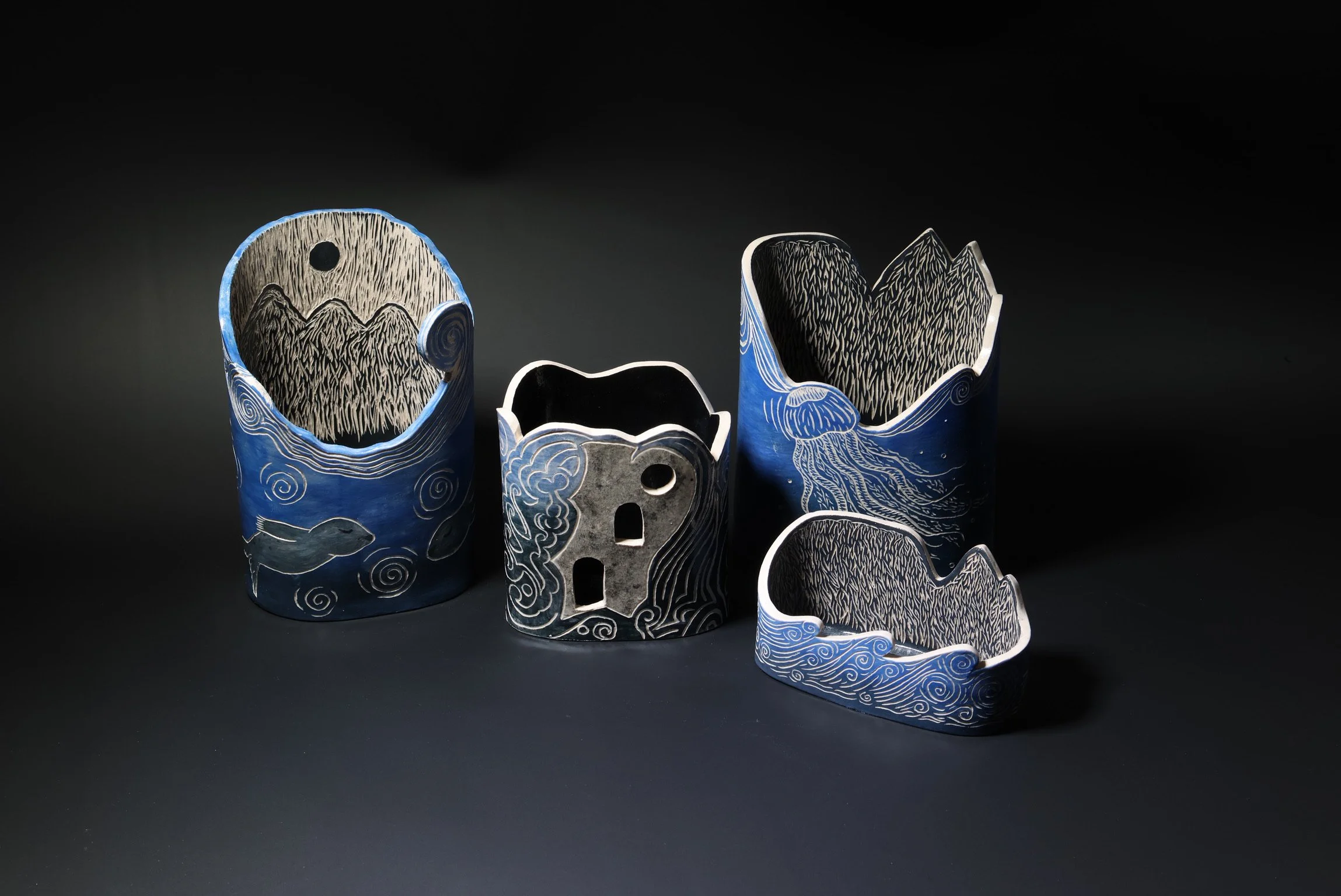
Taking inspiration from some of the icons of the Gower peninsula, I’m creating a new range of vases that capture the life and landscapes of the Gower. Hand-built with colourful glazes and sgraffito carved detail, this is a range of statement pieces fresh from the kiln.
Culver Hole
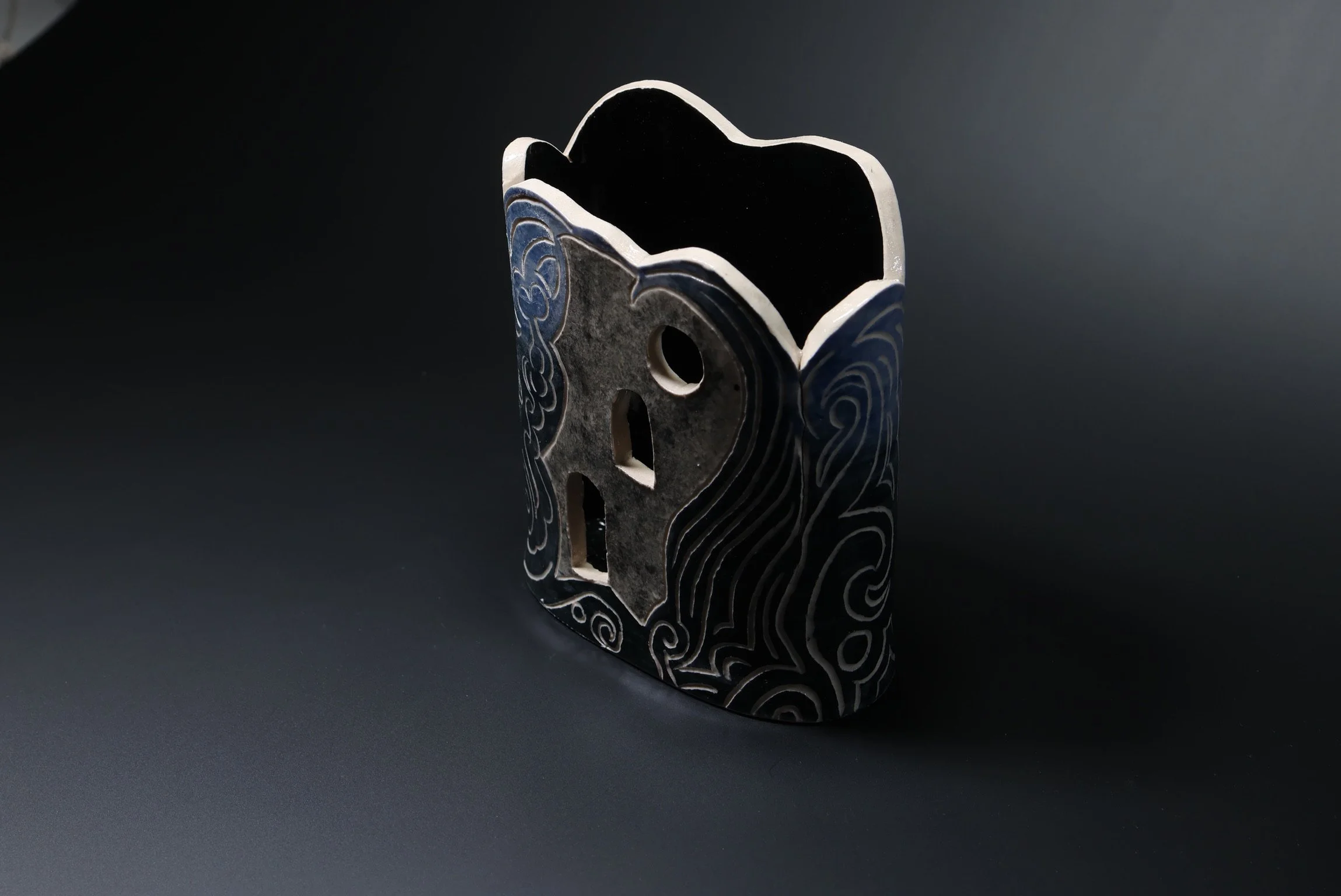
Culver Hole is a medieval anomaly on the Gower Peninsula, featuring an 18-metre stone wall built into a limestone sea cliff. Its primary historical purpose was a massive dovecote, constructed in the 13th or 14th century to provide fresh meat and eggs for local lords. The name stems from the Old English culfre, meaning pigeon, and the interior is honeycombed with 30 tiers of nesting boxes.
The structure’s fortress-like appearance fueled centuries of smuggling legends. Folklore centers on 18th-century "pirate" John Lucas, who allegedly used the cave as a secure storehouse for illicit brandy, tobacco, and silk. Tales even claim a secret tunnel large enough for a horse connected the hole to his nearby Salt House. While excavations found plenty of bird debris but no evidence of pirate treasure, the site remains a Grade II listed monument to Gower’s lawless maritime past, accessible only at low tide.
Jellyfish at Three Cliffs
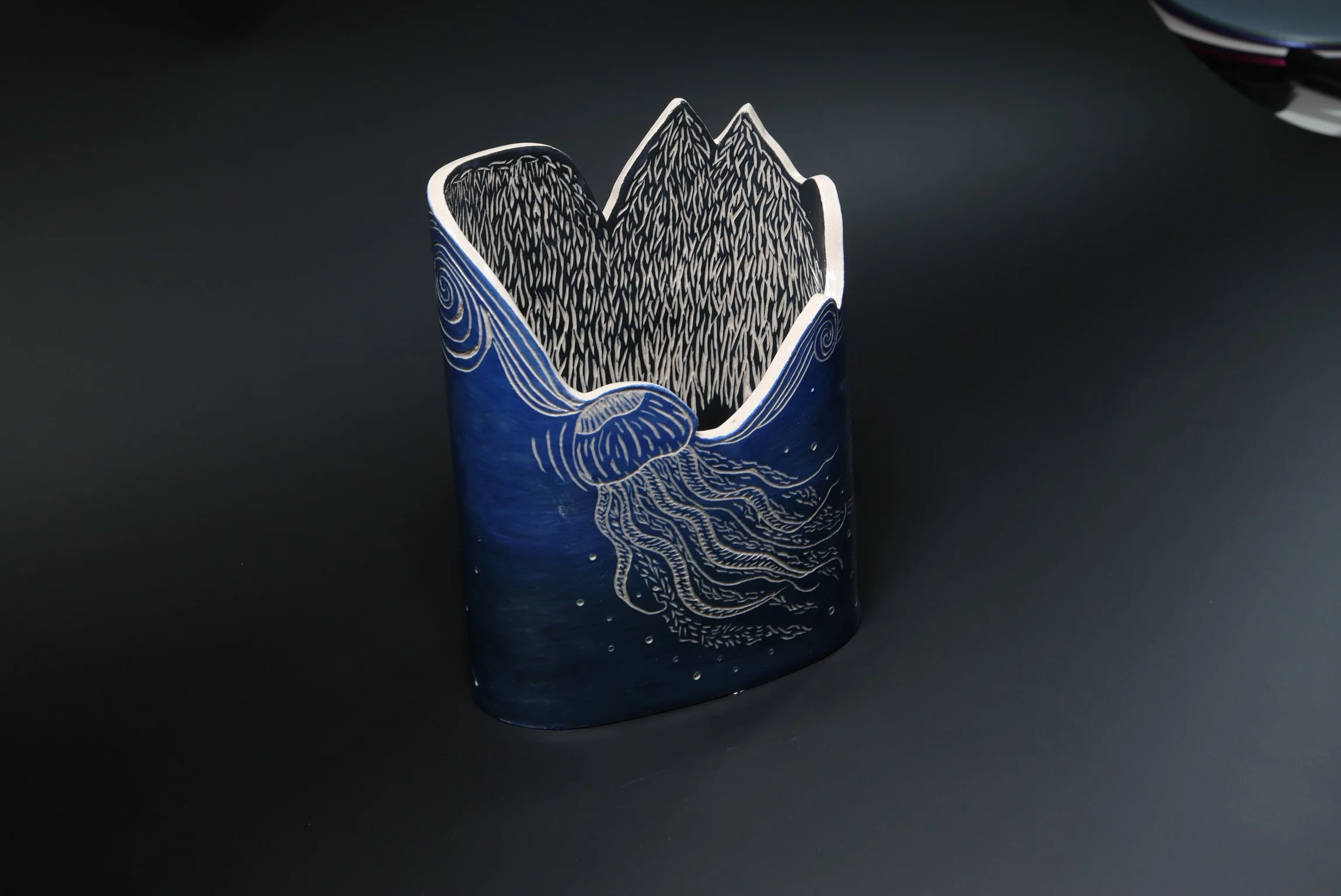
This hand-built ceramic vase captures the ethereal movement of a jellyfish, set against the dramatic backdrop of Three Cliffs Bay. Crafted using the sgraffito technique, Erica has meticulously scratched through a deep cobalt glaze to reveal the pale, spindly tentacles of a Moon Jellyfish winding around the vase’s swell. The organic, slightly asymmetrical form of the clay mimics the pulsing bell of the creature, while the glaze moves from a rich, deep sapphire at the base into darker indigo shades near the rim, evoking the abyssal depths of the Atlantic.
The vase mirrors the landscape: the iconic three limestone peaks. The contrast between the rugged, ancient stone of the Gower and the delicate, fluid lines of the jellyfish highlights the duality of the bay—a place of both enduring geology and fleeting, drifting life. It is a tactile tribute to the "blooms" that frequently dance through these deep Welsh coastal waters.
Three Cliffs
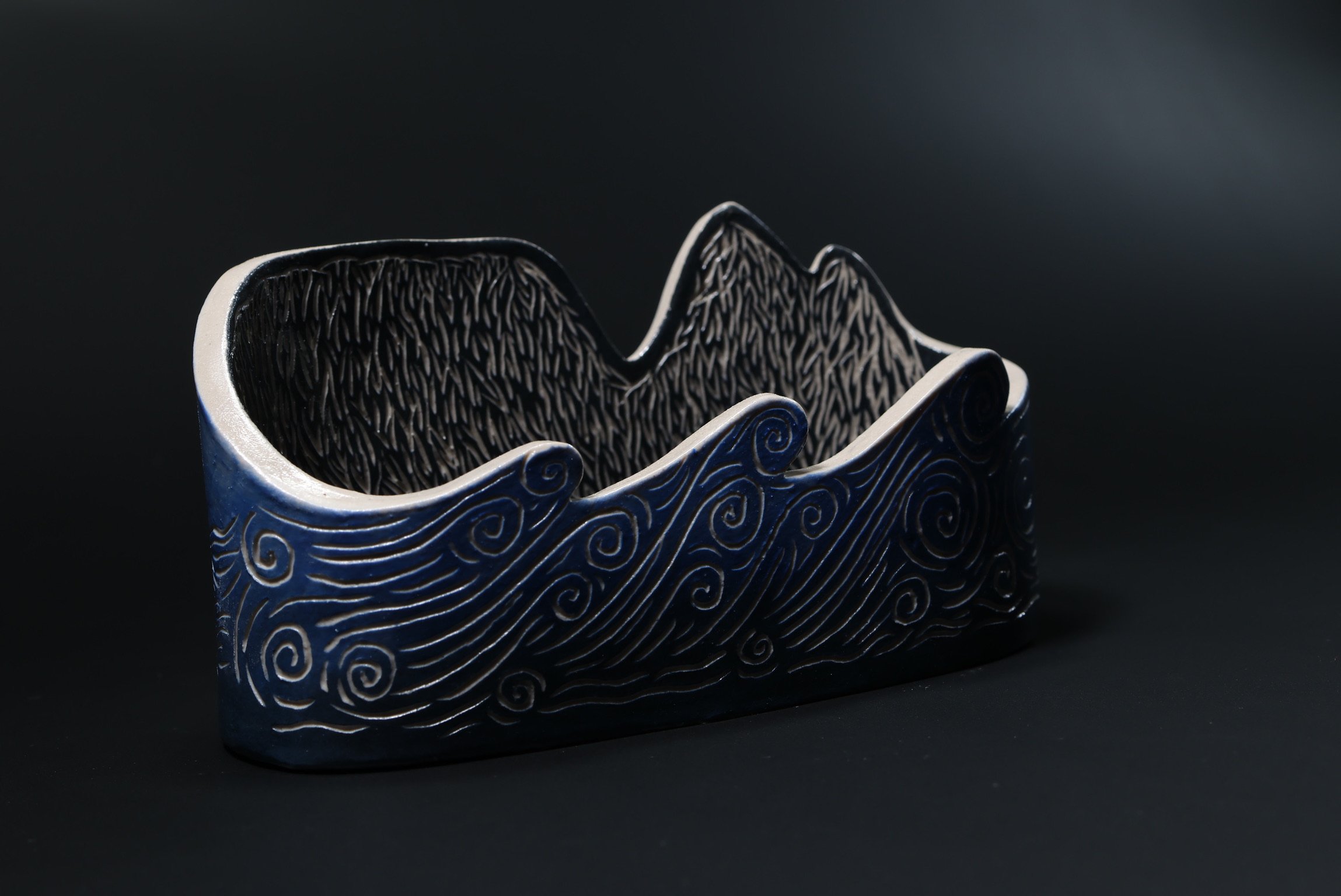
This hand-built ceramic vase captures the iconic silhouette of Three Cliffs Bay, with its three limestone peaks rising sharply from the clay’s surface. Using the sgraffito technique, Erica has carved through a deep cobalt glaze to reveal the pale, raw stoneware beneath, mirroring the sun-bleached rock against a brooding Welsh sky.
In the foreground, the glaze transitions into a turbulent, deep indigo, with layered textures representing the Atlantic’s crashing waves. These carved swells wrap around the base of the vase, grounding the static strength of the cliffs in the constant, rhythmic motion of the sea.
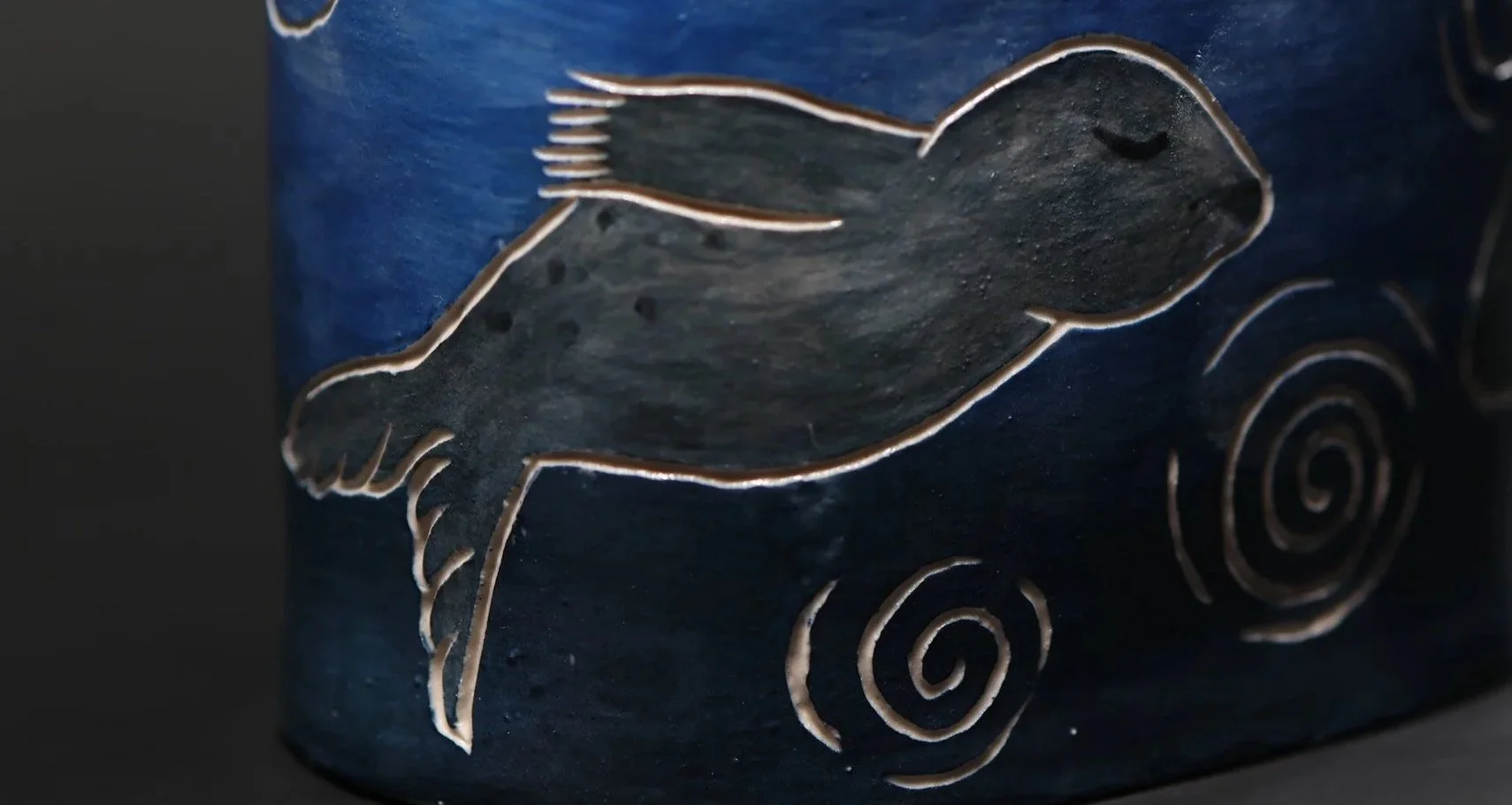
Seal in the deep
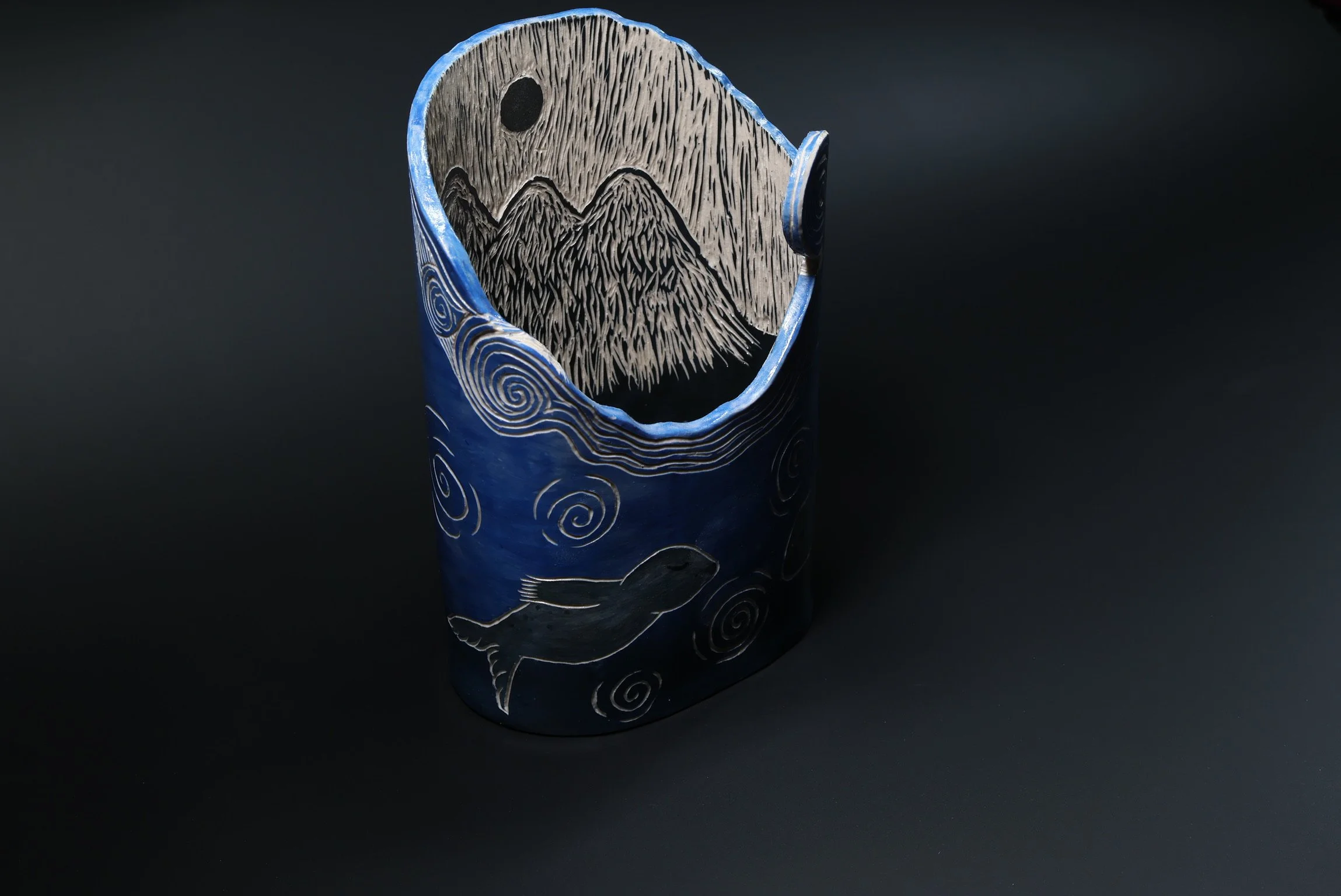
This hand-built ceramic vase serves as a deep-sea tribute to the hidden life of Three Cliffs Bay. Coated in a rich, midnight cobalt glaze, the vessel’s surface mimics the lightless depths of the Bristol Channel. Using the sgraffito technique, Erica has carved through the glaze to reveal Grey Seals gliding silently beneath the swells. The carved lines expose the pale, raw stoneware beneath, creating a shimmering, ghostly effect as the seal’s whiskers and sleek body appear to catch a stray beam of light from far above.
In the background, the iconic silhouette of the three limestone peaks is etched into the clay, looming over the seal like a submerged mountain range. The vase’s base is textured with heavy, carved undulations that represent the powerful Atlantic currents. It is a tactile, evocative piece that captures the secret, underwater world lying just beyond Gower’s rugged shoreline.